

GfGD at the 30th Colloquium of African Geology (CAG30), September 2025, in Nairobi, Kenya
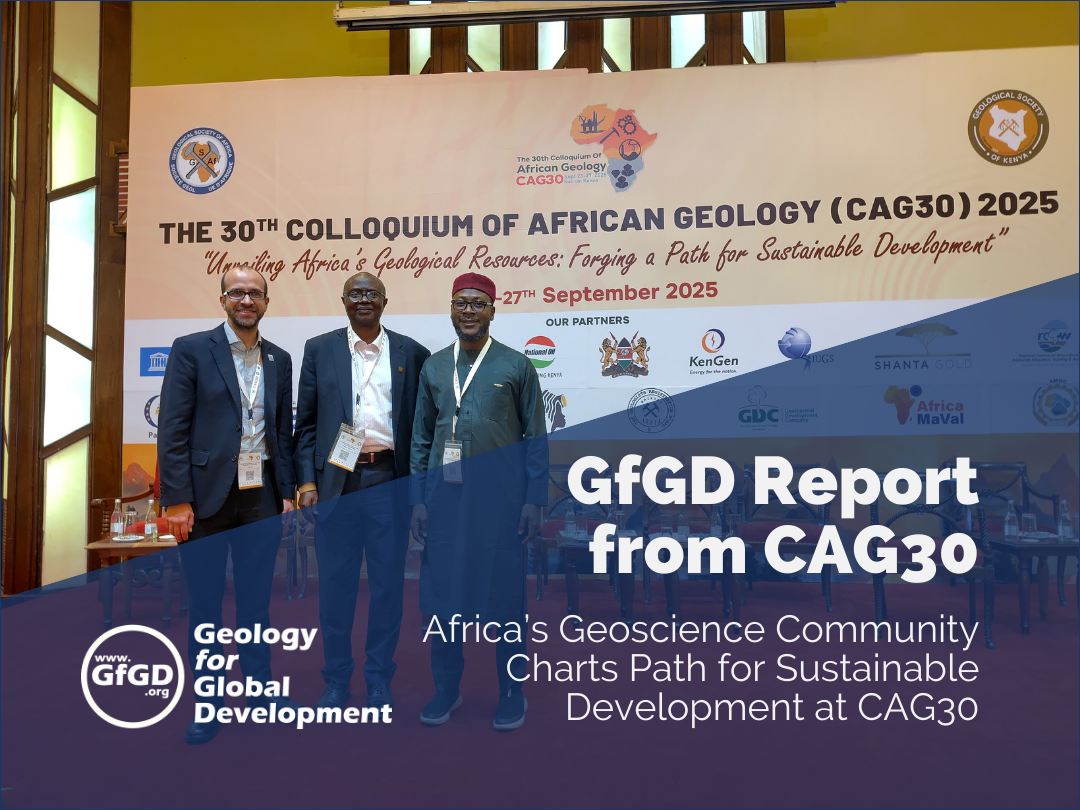
Africa’s Geoscience Community Charts Path for Sustainable Development at CAG30
The 30th Colloquium of African Geology (CAG30), held in Nairobi from 21–26 September 2025, convened geoscientists, industry leaders, and policymakers to assess how Africa’s geological resources can best support sustainable development. Organised by the Geological Society of Kenya and the Geological Society of Africa (GSAf), the meeting also marked major milestones: 50 years of the Geological Society of Kenya and the 60th anniversary of the Colloquium.
Representatives from Geology for Global Development (GfGD) participated extensively across sessions, workshops, and bilateral meetings as part of their broader commitment to strengthening geoscience capacity, supporting policy engagement at the international level, and expanding collaboration with African institutions.
Strengthening Partnerships Across the Continent
CAG30 served as a key platform for engagement with international and regional organisations shaping Africa’s geoscience agenda. GfGD joined discussions with the International Union of Geological Sciences (IUGS), UNESCO, and the Geological Society of Africa on enhancing support for research by African universities and African participation in global geoscience policy processes. Additional discussions with PanAfGeo, national geological societies, and the Organisation of African Geological Surveys, underscored broad demand for coordinated capacity-building efforts, improved access to resources, and new avenues for professional development.
Emerging Technical and Policy Priorities
Sessions across the colloquium highlighted several trends shaping Africa’s geoscience landscape. Engineering geology and geohazard management emerged as critical growth areas, particularly in the context of rapid urbanisation and large-scale infrastructure development. Participants emphasised the need for stronger integration of subsurface data practices to reduce risk and improve project outcomes.
Energy-transition themes featured prominently, with discussions on green hydrogen, carbon capture and storage, geothermal energy, and critical mineral resources signalling growing momentum towards low-carbon pathways.
Geoheritage and geoparks gained significant attention, particularly regarding the potential for African sites to pursue UNESCO Global Geopark status. Achieving this will require systematic baseline data collection and strategic support for candidate sites.
The conference also addressed persistent challenges facing African universities, including staffing constraints, limited resources for fieldwork, and barriers to accessing geoscience data. A preview of research in Nature Geoscience highlighted strong demand for training in project management, academic writing, and grant development—skills that complement technical expertise.
Artificial intelligence was another prominent theme, with interest in its applications for geological mapping, education, and data processing. However, discussions also raised concerns about ethical use, data governance, and capacity gaps, pointing to opportunities for further guidance and training.
Looking Ahead
The Geological Society of Africa announced that the next Colloquium of African Geology will be held in Ghana in 2027. In the interim, GfGD will progress several commitments arising from CAG30, including advancing discussions with IUGS, finalising an MoU with GSAf, piloting a research-skills training programme, and delivering online engagement to national geological societies.
As Africa’s geoscience community continues to grow, the collaborations and priorities identified at CAG30 illustrate the region’s determination to harness geological knowledge for sustainable and inclusive development.
